

 Back to Blogs
11 Simple Tips to Help You Arrange Furniture in Your Living Room
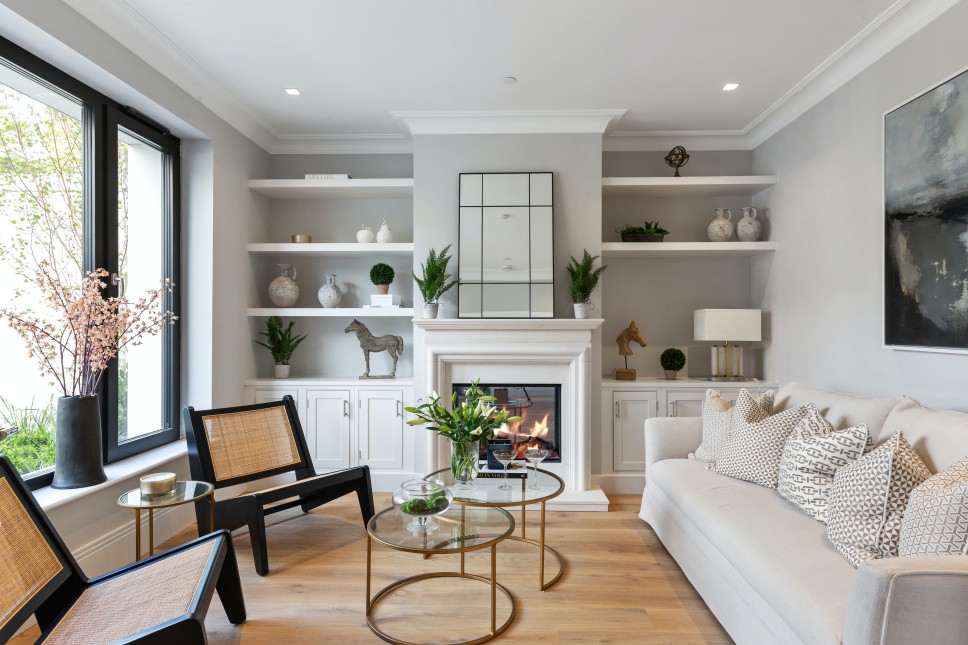
If you’re moving in or just ready for a change, switching up your living room setup is a simple way to make yourself feel at home and welcome guests at a glance. Creating a space that harmoniously balances the room with your furniture and knick-knacks may be harder than you’d think. If you’ve ever arranged your living room furniture before, you know how sometimes it just doesn’t flow right until you move pieces around and experiment. Our experts explain some common furniture arrangements for your living room below to make this process easier the next time you decide to change things up.
-
Firm Up Your Furniture Layout
When you picture your dream living room in your mind, you likely automatically think of one of the following furniture arrangements. They’re timeless classics for a reason, with several working well with rooms of virtually any size, style or shape.
Symmetrical Arrangement
The most traditional furniture arrangement—symmetrical layouts—consist of sofas as mirror images on either side of a coffee table. Alternatively, you could use two chairs in place of one of the sofas. As long as they mirror the placement of the sofa, it’s still symmetrical. This arrangement visually balances your space, adding harmony that works whether you enjoy contemporary, modern or traditional styles of furniture.
Floating Arrangement
Is your usable wall space limited by a home feature like a large bay or bow window? Relying on placing large furniture against walls won’t work in that case. A floating furniture layout, or one where furniture forms an island unit away from walls, is also a solid choice if your living area is open-concept and shared with your kitchen or dining area.
Arrangements for L-Shaped Rooms
An L-shaped room presents a challenge for placing your furniture, as you don’t want to block movement between spaces. Placing your sofa against the far wall is probably your best option here. You can use your sofa as an anchor point to ground the rest of the room around, putting your tv and other entertainment consoles against the opposite wall. That way, a path through the space and into the other part of your “L” is easily accessible.
Arrangements for Longer Living Rooms
If your living room is longer than it is tall, or roughly rectangular, you have two long walls working in your favor and not a lot of wiggle room in between them. The most common layout for this is placing your sofa along one wall and your console table and TV setup on the other. Since your living room likely has a little more extra room on one side, you could include a conversation area by grouping two cozy chairs with an end table.
Arrangements for Narrow Rooms
With a narrow room, every inch of space is precious. Placing a chair next to your console table along a wall offers additional seating for guests without taking up more space. That leaves plenty of room for your sofa and a small, easy-to-move coffee table.
-
Choose Your Focal Point
Whether it’s your television, a large piece of abstract art or the views out your picture window, you should have one focal point that draws the eye. From there, guests’ eyes can wander to the rest of your room. Be careful not to have too many competing elements stealing the limelight—that can lead to a crowded, visually complicated space. Arrange your space so your focal point is the center of attention, framing furniture around it.
-
Include Your Windows
Dressing up or emphasizing your windows as part of your living room can add plenty of appeal to your space. Place a side table underneath windows for decor, but don’t place large furniture in front of windows if they’ll block any part of the window off. Not only does this make operating curtains or blinds more difficult, but it prevents some natural light from making it into your home.
-
Placing Your TV
Your television is likely a gathering spot for your family. Placing it where it’s easily viewable from multiple angles, not just from your favorite seat, is an easy way to make your living room a comfortable space to relax for everyone. Your TV should be on the opposite wall from most of your furniture and at a good angle for viewing for long periods. You may be tempted to mount it in pride of place on top of your fireplace mantle, but if it’s a tall mantle, it may be better to place it elsewhere to prevent neck strain.
-
Make Space for Tables
For every seat in your living room, there should be a corresponding surface nearby. Think about it: You don’t want guests to need to get up and disrupt conversation to place a drink on a table or even on the floor. This doesn’t mean they need to be large or take up a significant amount of space. Plenty of coffee and end tables are designed to be unobtrusive or even double as storage spaces.
-
Leave Room for Foot Traffic
If your living room is small or part of an open-concept space, there’s a premium on empty floor space. When placing your furniture, navigate around it, seeing how much walking space there is in between, for instance, your sofa and coffee table (and pull in a family member or friend to help if you can). Make sure there’s plenty of room between pieces so you aren’t running into either furniture or other people.
-
Style Your Floor with a Rug
Without a rug to tie your furniture together, your living room likely won’t feel complete. Rugs define an area, pulling individual pieces together into one cohesive unit. However, when buying your rug, make sure it measures up to match the size of the furniture you’ll place over and around it. Area rugs should be wide enough to have edges peeking out from all furniture. Your rug should be large enough that it will be able to visibly border your furniture arrangement.
-
Seek Out Balance in Your Space
When arranging your furniture, both the layout and the actual furniture itself should be balanced. While you don’t need to find perfect symmetry, the size and locations of your furniture should make sense with both the other pieces around them and the room itself. Don’t lump all your larger pieces together in one part of the room. Instead, combine larger and smaller pieces in even groupings so the space feels consistent.
-
Add a Coffee Table
Without a coffee table, your living room just won’t feel complete. Coffee tables center living rooms, providing both visual and practical benefits. If you have room, go for a larger coffee table to maximize the surface area. However, if it comes down to sacrificing walking space between furniture and a larger coffee table, always choose walking space. You could also go with two smaller tables or a stacking set of tables to make moving pieces around easy.
-
Foster Conversation with Your Furniture
Whether you love hosting parties or just want an area to wind down the day with family, your living room should be the perfect place to foster conversation. Place your sofa and chairs so that facing others is easy, without craning necks or raising voices to be heard. That being said, you don’t want them too close to inhibit easy movement. If you have space, place a couple of chairs in an individual grouping for close conversation.
-
Don’t Forget Your Walls
Without art, pictures or shelving on your walls, your living room won’t feel like your own space! Artwork and family photos add welcome character, but they should be sized and grouped well. Two small pictures won’t match a large piece of furniture like your sofa. A gallery wall or large piece of art is well-suited there. Matching the size of your wall decor to the space around it brings personality without feeling overwhelmed or, alternately, overwhelming.
Ready to Renovate Your Home?
If you’re moving in or ready for a change, why not consider switching up your windows, doors, siding and/or roofing? A beautiful new exterior for your home will harmoniously highlight your living room changes as well as any other newly redone spaces in your home. Get in touch with us for your free estimate!