

 Back to Blogs
Your Guide to Your Home's Roof
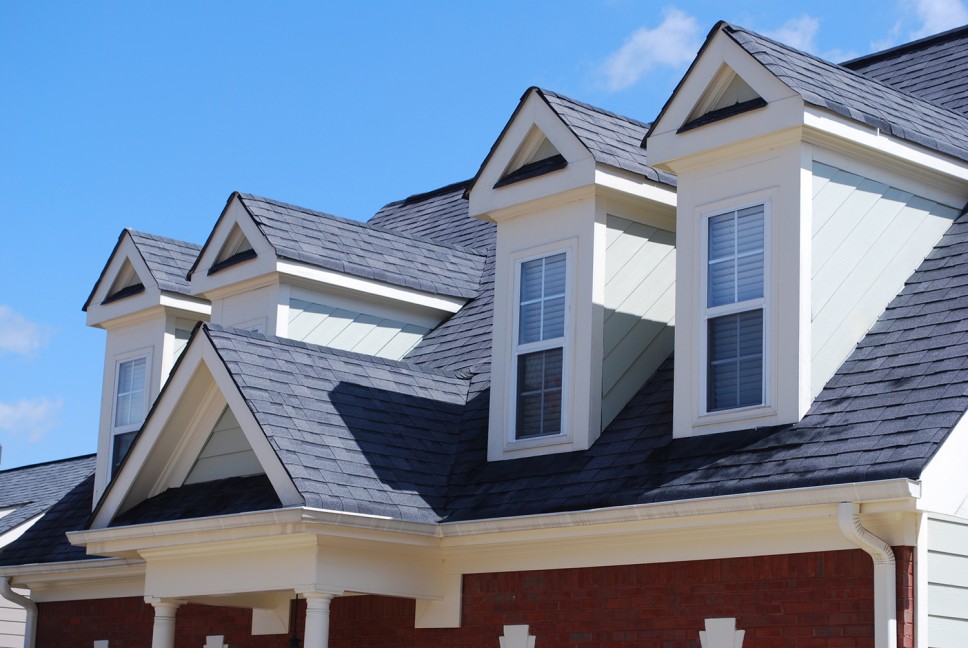
When homeowners consider the roof over their heads, it’s often with a bit of trepidation. After all, it’s this complex-seeming, expensive structure that keeps the elements out of the delicate interior components of their home.
Yet, we can often get so caught up in roof anxiety that we neglect to adequately acknowledge its existence entirely, instead giving in to the often harmful approach of “out of sight, out of mind” or the even worse, “no news is good news”. The truth is, the health of your roof is important to understand.
To understand your roof, you first need to break it down into its primary components. So, without further ado, let’s demystify the common roof, and empower ourselves to take proactive control over its maintenance and health!
Roof System
Let’s start simple and all-encompassing. Your roof system is the entire roof; the thing that sits atop your home like a hat. It’s meant to keep moisture out of your home (and the exterior structure) while also regulating the temperature and humidity. It’s one of the most effective barriers between your cozy home and the outside.

Ridge Vents
Believe it or not, a roof is not supposed to be a complete seal. Instead, it needs a variety of different vents to regulate the temperature as well as the natural, year-round humidity of your home. One of these vents is known as a “ridge vent”, which are slits at the peak of your roof. A humid attic or crawlspace is a moldy one, so ventilation is key to a dry interior.
Flashing
One of the points of least resistance for water is at the base of your chimney, around skylights, or at any joint along the structure of the roof. Flashing is a flexible metal material that is laid on these weak points to further insulate those potential points of egress against impeding moisture.
Roof Ridge
Your roof ridge is the horizontal line running the length of your home where the two adjacent planes of your roof meet together. This is also where the aforementioned ridge vents are placed (hence the name).
Hip
The hip, like your roof ridge, is where two planes of your roof meet. However, a hip is when those planes slope, so a hip is the meeting place of a downward sloping roof.

Decking
If you peek into your attic or crawlspace and get a look at the ceiling structure, then you can see the decking of your roof on display. Typically made of plywood, the decking is a flat sheet of wood that is applied over the structural foundation (think of them like ribs). If your roof structure is the ribs, then decking is the meat on those bones!
Underlayment
Over the plywood decking goes a layer of underlayment, which is a moisture-resistant membrane, commonly felt, that goes between your decking and your shingles. Underlayment is a second defense against moisture.
Shingles
Your roof’s shingles are its first defense against the elements. They’re meant to repel everything; moisture, wind, and even the UV radiation from the sun. They are made of a variety of materials; some are less expensive for budget-conscious homeowners, and some are manufactured with performance and longevity in mind.

Gable or Rake
Most commonly referred to as a gable, both a gable and rake describe the triangular protrusion between a sloping roof and the eave of a house.
Dormer
A dormer is a raised structure that comes out of the slope of a roof, typically with windows.
Eaves
Your eaves are the lower portion of your roof that typically hangs over the exterior walls of your house.

Seal, Defend, Breathe
Now that you can picture the “roof system” and how its components work with one another to protect your home, then you might begin to understand the three primary roles of a modern roof: to seal, defend, and breathe.
Our roofing systems offered–Owens Corning Total Protection Roofing System and CertainTeed Integrity Roofing System– are state of the art systems that do just that. While we recommend you do an annual inspection of your roof, it may be time to modernize and replace your roof using the newest technology in the industry.